
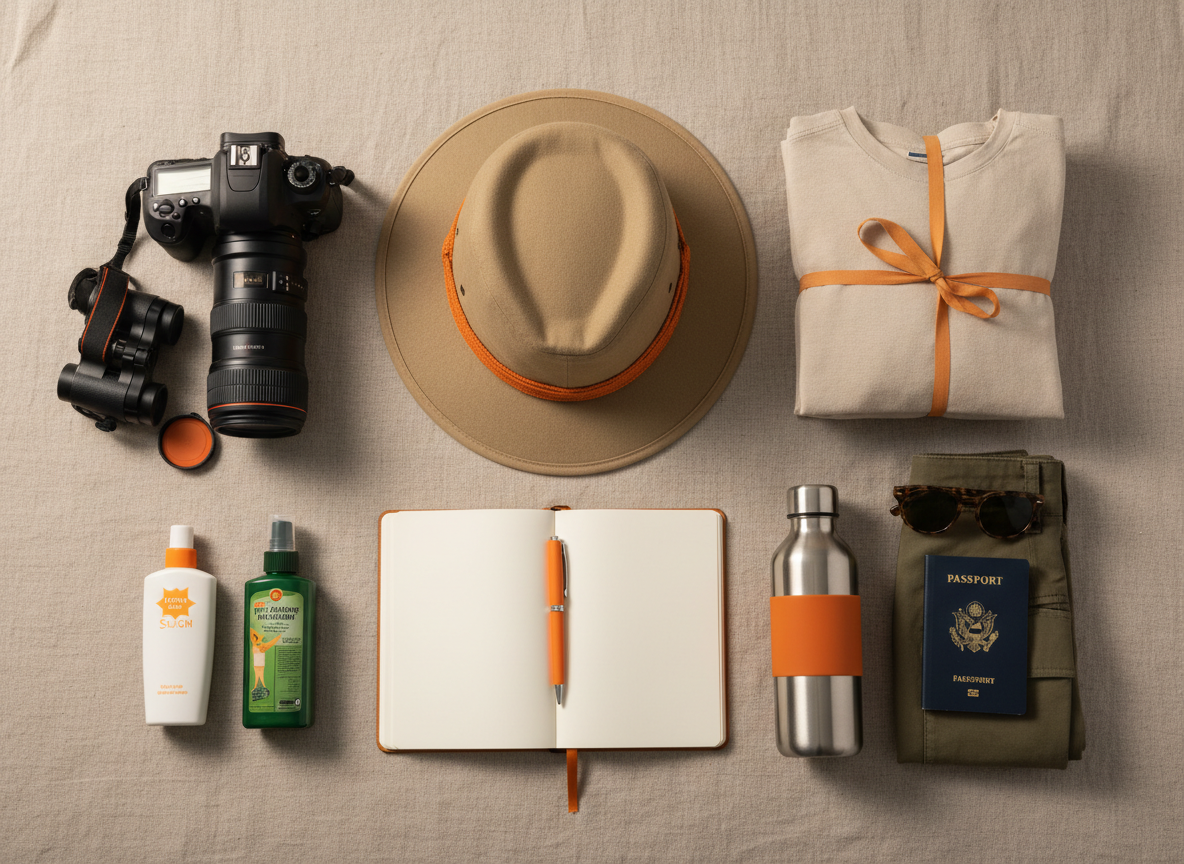
Packing for a Kenya safari is a practical exercise in editing. Bring too much and you will pay overweight fees at the airstrip, or find your bag too large for a small bush plane. Bring too little and early mornings on the Mara in eight-degree chill will be harder than they need to be. This guide covers the clothing, gear, health items, and documents that make a real difference, along with a clear picture of what to leave at home.
Clothing: Dress for the Range of Conditions
Kenya’s game parks span a range of elevations and microclimates. Daytime temperatures on the open plains of the Masai Mara typically reach 25 to 30 degrees Celsius, but game drives begin before sunrise when temperatures can drop to 8 to 12 degrees. Pack for both ends of that range, not just the midday warmth.
Colours and Fabrics
Neutral tones are the standard across safari destinations, and the reasoning is practical. Khaki, olive, tan, and beige blend into the landscape and avoid startling wildlife during close approaches. Bright whites, reds, and yellows are best left in the suitcase. Beyond colour, fabric choice matters more than brand. Lightweight, quick-dry synthetics handle repeated wear and fast lodge laundry cycles. Cotton feels comfortable but absorbs sweat poorly and takes much longer to dry in humid conditions.
Core clothing list:
- 5 neutral-coloured shirts, a mix of short and long sleeve
- 2 pairs of lightweight long trousers in quick-dry fabric
- 2 to 3 pairs of shorts for lodge downtime
- 1 fleece or light jacket for early morning and evening game drives
- 1 cardigan or thin mid-layer for higher elevations
- Wide-brimmed hat or a close-fitting cap
- Comfortable, warm sleepwear
Footwear
Bring walking shoes or light hiking boots that are already broken in before you travel. New footwear and rough game-drive tracks are a poor combination. Closed-toe boots also provide ankle support on walking safaris. On a walking safari, tuck trouser legs into your socks and treat clothing with a permethrin-based repellent beforehand; grass ticks are a real presence in bush terrain, and closed footwear with tucked trousers is the simplest defence. Sandals work well at the lodge and around the pool, but keep them off the vehicle during drives. Merino wool or synthetic-blend socks are far preferable to cotton, which stays damp and causes blisters.
Safari Gear and Electronics
Optics and Camera
Binoculars make a measurable difference, particularly when you are distinguishing a cheetah from a termite mound at 300 metres. An 8×42 or 10×42 magnification binocular covers most situations well. For photography, a telephoto lens in the 200 to 400 mm range rewards the extra bag space. Wildlife does not always close the distance, and a wide-angle lens captures the landscape context that telephoto alone cannot.
Whether binoculars are provided varies by camp: some higher-end properties keep a shared pair in each vehicle or lend a set for the stay, but plenty do not, so bring your own rather than assume one will be waiting. Cameras and personal optics are always the traveller’s own responsibility. On the adapter question, Kenya and Tanzania both run 230V at 50Hz on the same Type G plug, so a single adapter covers a trip that crosses both countries.
Electronics checklist:
- Binoculars (8×42 recommended as a starting point)
- Camera body with telephoto lens and a wide-angle option if space allows
- At least 2 to 3 spare batteries per camera body
- High-capacity memory cards with fast write speeds
- Portable power bank for all-day vehicle use
- Travel adapter (Kenya uses Type G British-standard plugs)
- Lens cleaning kit, brush, and microfiber cloths (dust is a constant presence)
Daypack
A 20 to 30 litre daypack keeps essentials accessible during game drives without consuming foot space in the vehicle. A water bottle, sunscreen, jacket, camera accessories, and snacks fit comfortably in that range.
Health, Sun Protection, and Personal Items
The equatorial sun in Kenya is direct and intense, even on overcast mornings. SPF 50+ sunscreen applied before the first game drive is not optional. Add UV-protective sunglasses and lip balm with an SPF rating to cover the surfaces that clothing does not.
Health and toiletry checklist:
- Sunscreen SPF 50+ (waterproof formula)
- Insect repellent with DEET for malaria, tick, and mosquito protection
- Malaria prophylaxis, as prescribed by your doctor before departure
- First aid kit covering bandages, antibiotic ointment, and blister treatment
- Pain relief such as ibuprofen or paracetamol
- Antihistamine for insect bites and dust-related irritation
- Anti-diarrhea medication
- Prescription medications in their original labelled containers
- Hand sanitizer and wet wipes for use between stops on long drives
- Aloe vera gel or after-sun lotion for skin recovery
- Feminine hygiene products (limited availability in remote camp areas)
- Extra prescription eyeglasses or contact lens solution
Strong perfumes and colognes are worth skipping. Scents carry in open vehicles and can affect wildlife behaviour during close encounters.
Documents and Money
Travel Documents
Kenya operates an e-visa system. Apply online well before your departure date and carry a printed or digital copy of your approval letter. Your passport needs at least six months of validity beyond your travel dates. Travellers entering from or transiting through yellow fever zones are typically required to show proof of vaccination at the point of entry.
Documents to carry:
- Passport with a minimum of six months validity
- Kenya e-visa approval letter
- Travel insurance certificate covering comprehensive medical care and evacuation
- Yellow fever vaccination certificate if applicable to your route
- Printed or digital lodge and flight confirmations
- Emergency contact list stored separately from your phone
Money
Kenyan Shillings (KES) are the practical currency for tipping guides and camp staff, and for purchases at local markets. Most lodges and larger establishments accept Visa and Mastercard. ATMs are available in Nairobi and in larger towns along well-travelled routes. A money belt or secure inner pocket is safer than keeping cash in a daypack.
What to Pack for a Kenya Safari Varies by Destination
Different parks call for slight adjustments to the same core kit.
Masai Mara (peak season: July through October). This period coincides with the Great Migration and the height of the dry season. Days are warm, but mornings on the open savannah are cold. An extra mid-layer is useful. Rain is rare but not impossible, so a packable rain jacket adds minimal weight for useful cover.
Amboseli (all seasons). Amboseli sits at a higher elevation than the Mara and stays cooler throughout the year. Warm layers apply even in the dry months. The fine volcanic soil that defines the landscape also coats gear quickly. A bandana or lightweight buff scarf keeps dust out of your face during drives.
Tsavo (dry season). Tsavo runs drier and hotter than the northern parks. Prioritise sun protection and carry extra dust management items. The red laterite soil is Tsavo’s visual signature, and it settles into everything including lenses, bags, and open electronics.
Diani Beach (post-safari coast extension). If the itinerary finishes at the Indian Ocean coast, add a swimsuit, a lightweight cover-up, and reef-safe sunscreen to the kit.
What Not to Bring
- Bright colours, particularly reds, yellows, and white shirts on game drives
- Camouflage clothing, which is prohibited in Kenya
- Hard-sided luggage: bush flight cargo holds require soft bags only
- Strong perfumes or cologne
- Single-use plastic bags: Kenya enforces a strict ban, and violators face significant fines
- Excessive jewellery or valuables beyond what you will actually wear
- Formal clothing beyond one smart-casual outfit for a special dinner
The luggage weight limit deserves its own emphasis. Charter flights between parks use small propeller aircraft with strict per-passenger limits, typically 15 kg total including carry-on, and bags must be soft-sided. If your bag and daypack together exceed that threshold, you will face fees or be asked to leave items at your Nairobi accommodation. Check the specific limit with your charter operator before packing.
Explorer Notes
Insect repellent application matters as much as the product itself. Apply it after sunscreen, not before, and reapply every three to four hours during outdoor activity. DEET concentrations of 30 to 50% are effective for mosquito and tick protection in Kenyan game parks.
Rolling clothes saves space and reduces creasing. Packing cubes make category sorting straightforward across a two-week itinerary and speed up access when you are moving between camps every two or three days.
Leave room in your bag on the outbound trip. Textiles, carved items, and local crafts tend to follow travellers home from Kenyan markets. An empty compression bag packed flat handles the overflow at almost no weight cost.
Drone regulations in Kenya are strict. Drones require a permit from the Kenya Civil Aviation Authority, and many national parks and conservancies prohibit them outright. Confirm current rules before packing one, as enforcement at airstrips has tightened in recent years.
Dust is a constant variable. In the dry season, fine red or grey dust penetrates camera bags, shoes, and half-open toiletry cases. Ziplock bags inside your kit add cheap protection for items that cannot be easily cleaned in the field.
A Well-Packed Kit Goes a Long Way
Understanding what to pack for a Kenya safari ultimately comes down to reading the conditions: cold early mornings, hot midday drives, dry and dusty roads, and the occasional highland chill. The same core principles apply regardless of which parks you visit. Neutral clothes in layers, quality optics, reliable sun and insect protection, the right paperwork, and soft bags that fit a bush plane will carry you through most situations.
Verify luggage weight limits with your charter operator or lodge booking contact before you travel. Kenya Wildlife Service and your accommodation team are the best sources for up-to-date entry requirements and any park-specific restrictions that apply to your dates.
Turn this reading into a real itinerary with help from a Kenya-based safari team.
Start Planning Your SafariFurther reading
More safari planning resources
- Best time to visit Kenya month-by-month map from Valley Safaris
- Diani Beach guide on FindMySafari
- Compare Kenya safari packages on FindMySafari
- Map of Tsavo from Valley Safaris


[…] Planning tips before you book […]
[…] a Kenya safari, two very different Indian Ocean beach extensions are within reach. The Kenya Coast: particularly […]